
Power PlatformIntermediate
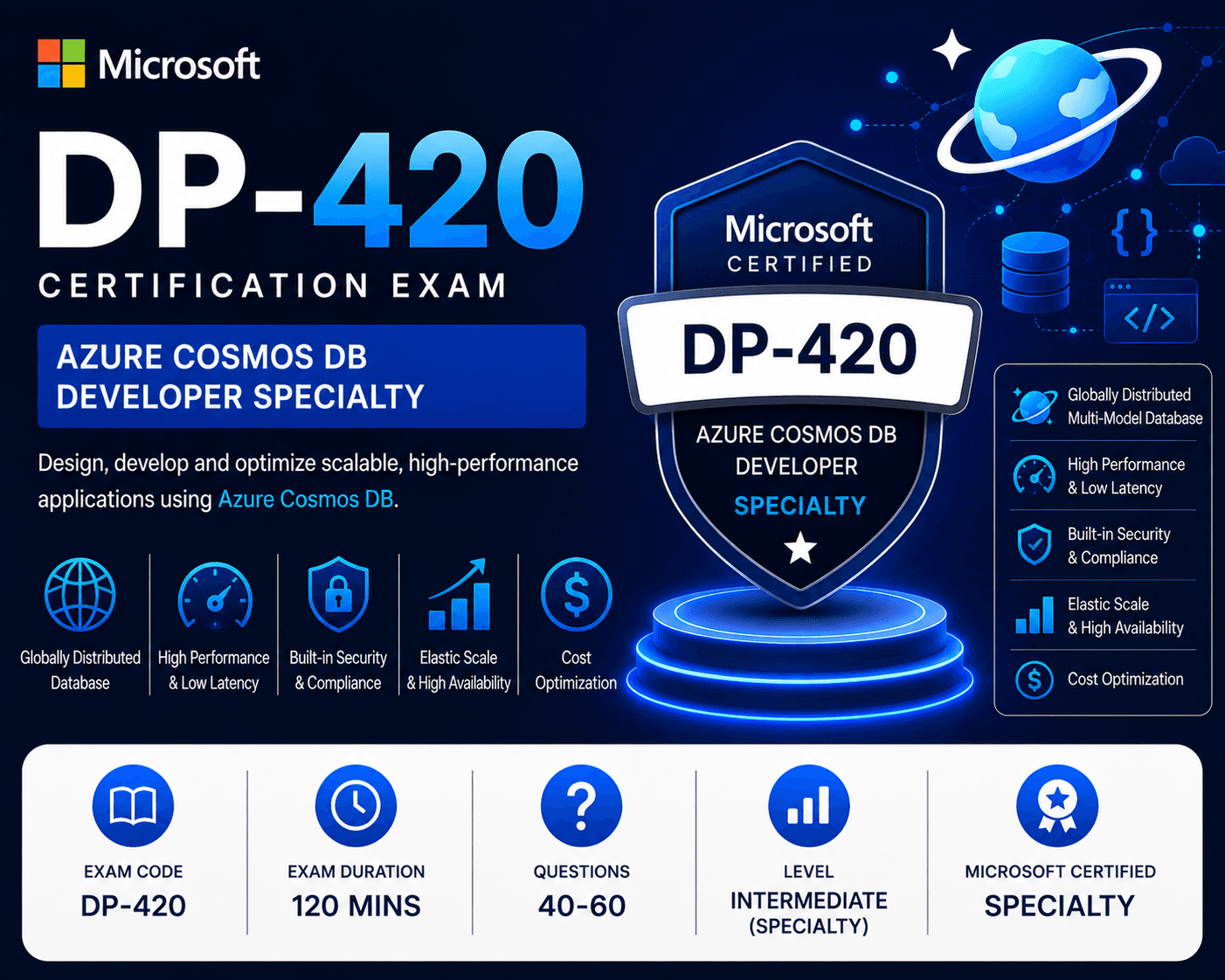
DP-420 Azure Cosmos DB Developer Specialty
5 (140 reviews) 145 students 6 Weeks Intermediate
Instructor
Category
Power Platform
Rating
5 (140)
Students
145
Language
English
Duration
6 Weeks
What you'll cover
1Design and Implement Data Models+
- Design data models for Azure Cosmos DB
- Choose appropriate partition keys
- Configure logical and physical partitions
- Model relationships and denormalize data
- Select appropriate APIs and data types
- Design for scalability and performance
2Develop Azure Cosmos DB Solutions+
- Create and manage Azure Cosmos DB resources
- Work with the Azure Cosmos DB SDK
- Implement CRUD operations
- Query and manipulate data using supported APIs
- Implement transactional operations
- Develop applications using Azure Cosmos DB
3Implement Data Distribution and Replication+
- Configure global data distribution
- Implement multi-region writes
- Configure consistency levels
- Manage replication and failover
- Design for low-latency access
- Maintain availability across regions
4Optimize Performance and Cost+
- Analyze request unit (RU) consumption
- Optimize queries and indexing policies
- Design efficient partitioning strategies
- Monitor database performance
- Configure autoscale and throughput
- Optimize Azure Cosmos DB costs
5Implement Security and Reliability+
- Configure authentication and authorization
- Implement Microsoft Entra ID integration
- Secure Azure Cosmos DB networking
- Configure encryption and security controls
- Implement backup and restore strategies
- Design highly available solutions
6Monitor and Troubleshoot Applications+
- Monitor Azure Cosmos DB metrics
- Analyze diagnostics and logs
- Identify performance bottlenecks
- Troubleshoot queries and connectivity
- Monitor request units and throttling
- Use Azure Monitor to maintain application health
7Integrate and Maintain Azure Cosmos DB Applications+
- Integrate Azure Cosmos DB with Azure services
- Implement change feed solutions
- Use Azure Functions with Cosmos DB
- Manage application lifecycle and deployments
- Implement data migration strategies
- Maintain and update production workloads